Humans are becoming the UX layer of AI
Humans are becoming the UX layer of AI
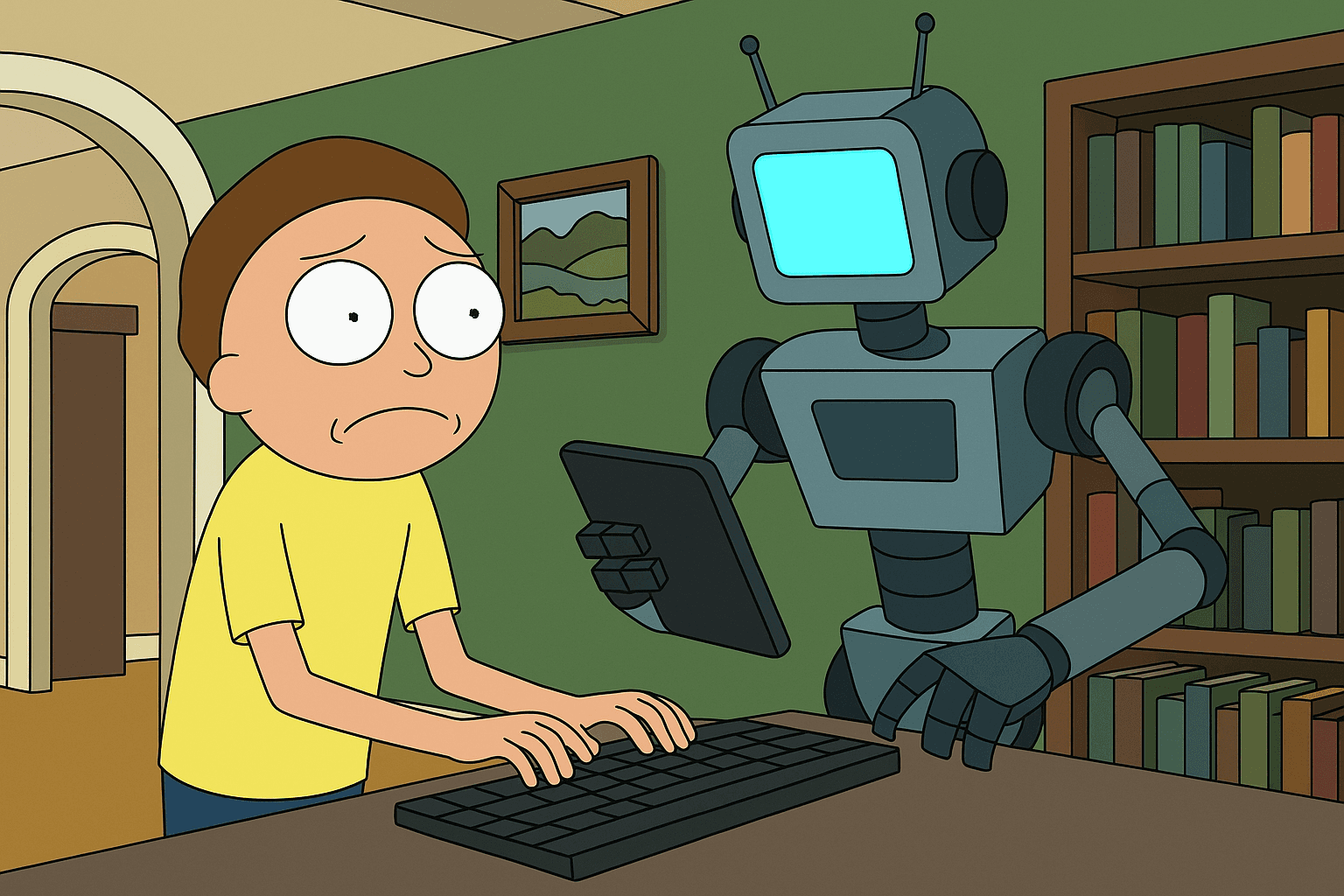
More and more of today’s communication is no longer written by people. Emails, messages, posts, job applications, and even call scripts now start as AI drafts. Our role has quietly shifted from creating ideas to simply approving whatever the machine produces.
Humans don’t create ideas — they just trigger them.
Machines write the words — humans simply hit send.
AI plans the conversation — humans read whatever shows up.
We’ve become a thin “human layer” between machines — the final click that keeps everything looking personal. And while this feels fast and efficient, it has a hidden cost: when machines do the expressing, we stop doing the thinking.
If you don’t write your own ideas, you stop forming them. If AI fills in your arguments, you stop practicing clear reasoning. The language still looks smooth and confident, but the human mind behind it gets weaker.
And here’s the bigger problem:
If humans aren’t producing the thoughts behind the words, then the words can’t show what humans actually think.
Words no longer show what people Really Mean.
AI rewrites and “improves” almost everything. The result is clean, polished text — but it doesn’t reflect the person sending it. It reflects the model shaping it.
And this is no longer only about written text.
People now join sales calls, investor meetings, and interviews with AI-generated scripts. Some read them word for word.
The voice is human.
The intent is not.
When both text and speech come from AI patterns instead of human thinking:
words stop showing intention and content stops showing the real person.
At this point, text-based and speech-based analysis becomes almost useless, because you’re analyzing words that may not belong to the person speaking.
This is why Simpleem takes a different path.
We don’t rely on language — because language is now the easiest part to fake. Instead, we look at behavior: micro-reactions, emotional shifts, attention changes, and decision patterns. These signals still come from the human, not the machine.
Because here is the uncomfortable truth:
When language no longer comes from the human mind, everything built on language becomes unreliable.
And this raises a hard question:
If our communication stops coming from us, how long before our decisions stop coming from us too? And will anyone notice when that line finally disappears?
We are moving toward that moment — quietly, one AI-generated sentence at a time.
Where we end up is still unknown.
More and more of today’s communication is no longer written by people. Emails, messages, posts, job applications, and even call scripts now start as AI drafts. Our role has quietly shifted from creating ideas to simply approving whatever the machine produces.
Humans don’t create ideas — they just trigger them.
Machines write the words — humans simply hit send.
AI plans the conversation — humans read whatever shows up.
We’ve become a thin “human layer” between machines — the final click that keeps everything looking personal. And while this feels fast and efficient, it has a hidden cost: when machines do the expressing, we stop doing the thinking.
If you don’t write your own ideas, you stop forming them. If AI fills in your arguments, you stop practicing clear reasoning. The language still looks smooth and confident, but the human mind behind it gets weaker.
And here’s the bigger problem:
If humans aren’t producing the thoughts behind the words, then the words can’t show what humans actually think.
Words no longer show what people Really Mean.
AI rewrites and “improves” almost everything. The result is clean, polished text — but it doesn’t reflect the person sending it. It reflects the model shaping it.
And this is no longer only about written text.
People now join sales calls, investor meetings, and interviews with AI-generated scripts. Some read them word for word.
The voice is human.
The intent is not.
When both text and speech come from AI patterns instead of human thinking:
words stop showing intention and content stops showing the real person.
At this point, text-based and speech-based analysis becomes almost useless, because you’re analyzing words that may not belong to the person speaking.
This is why Simpleem takes a different path.
We don’t rely on language — because language is now the easiest part to fake. Instead, we look at behavior: micro-reactions, emotional shifts, attention changes, and decision patterns. These signals still come from the human, not the machine.
Because here is the uncomfortable truth:
When language no longer comes from the human mind, everything built on language becomes unreliable.
And this raises a hard question:
If our communication stops coming from us, how long before our decisions stop coming from us too? And will anyone notice when that line finally disappears?
We are moving toward that moment — quietly, one AI-generated sentence at a time.
Where we end up is still unknown.
More and more of today’s communication is no longer written by people. Emails, messages, posts, job applications, and even call scripts now start as AI drafts. Our role has quietly shifted from creating ideas to simply approving whatever the machine produces.
Humans don’t create ideas — they just trigger them.
Machines write the words — humans simply hit send.
AI plans the conversation — humans read whatever shows up.
We’ve become a thin “human layer” between machines — the final click that keeps everything looking personal. And while this feels fast and efficient, it has a hidden cost: when machines do the expressing, we stop doing the thinking.
If you don’t write your own ideas, you stop forming them. If AI fills in your arguments, you stop practicing clear reasoning. The language still looks smooth and confident, but the human mind behind it gets weaker.
And here’s the bigger problem:
If humans aren’t producing the thoughts behind the words, then the words can’t show what humans actually think.
Words no longer show what people Really Mean.
AI rewrites and “improves” almost everything. The result is clean, polished text — but it doesn’t reflect the person sending it. It reflects the model shaping it.
And this is no longer only about written text.
People now join sales calls, investor meetings, and interviews with AI-generated scripts. Some read them word for word.
The voice is human.
The intent is not.
When both text and speech come from AI patterns instead of human thinking:
words stop showing intention and content stops showing the real person.
At this point, text-based and speech-based analysis becomes almost useless, because you’re analyzing words that may not belong to the person speaking.
This is why Simpleem takes a different path.
We don’t rely on language — because language is now the easiest part to fake. Instead, we look at behavior: micro-reactions, emotional shifts, attention changes, and decision patterns. These signals still come from the human, not the machine.
Because here is the uncomfortable truth:
When language no longer comes from the human mind, everything built on language becomes unreliable.
And this raises a hard question:
If our communication stops coming from us, how long before our decisions stop coming from us too? And will anyone notice when that line finally disappears?
We are moving toward that moment — quietly, one AI-generated sentence at a time.
Where we end up is still unknown.